

Reach Higher
In response to the current geopolitical situation in the Mediterranean, the expedition has been rescheduled from 2026 to 2027.


Be Part of a Community Of Changemakers
Mare Nostrum is the full coastal and ocean programme of Guardians of Gaia, of which the 2027 expedition is one part.
On board, you sail with forty young people from across disciplines and cultures.
On land, you meet hundreds more, across generations and professions.
You become part of a living human chain connecting the shores of the Mediterranean.

1 min Teaser
Listen to the podcast on Mare Nostrum

The Mediterranean.
Where the expedition begins
Mare Nostrum. Our Sea. These waters have never belonged to one people alone. For millennia, the Mediterranean has been the world's most storied crossroads: where Amazigh, Arab, Berber, Greek, Phoenician, Ottoman, and European cultures have exchanged languages, foods, knowledge, and ways of reading the sky and the sea. It is the birthplace of olive trees and epics, of fishing traditions older than written history, of an intimacy between human communities and the living sea that no other ocean has quite replicated.
It is also one of the most alive seas on Earth. Its waters hold extraordinary biodiversity, endemic species found nowhere else, migration corridors connecting continents, ecosystems of rare complexity shaped by thousands of years of human and natural co-evolution.
And it is one of the most threatened. The Mediterranean is warming faster than the global ocean average. Its shores face intense pressure from shipping, coastal development, plastic pollution, and invasive species arriving through warming waters. The communities who have known this sea longest are among the first to feel these changes — in their catches, their coastlines, their seasons.
The 2027 expedition begins here not despite this complexity, but because of it. The Mediterranean is where urgency meets beauty, where ancient knowledge meets frontier science, where local action has always had the power to ripple outward. It is the right place to start — and the right sea to learn from.


SAIL WITH US
The 2027 Expedition — Open to All
Whether you are a university student, taking a gap year, finishing your studies, entering your first professional chapter, or simply a young explorer
It is a journey that shapes your worldview, your skills, your courage, and your sense of purpose. It is not a course.
It is a threshold. A human, scientific, cultural, and inner, experience that leaves a life long imprint.
What matters is not your degree or your background. What matters is that you are curious or adventurous, drawn to other cultures and ways of knowing, committed to the protection of the living world, and ready to engage with it differently.
No sailing experience required. Just the desire to be part of something larger than yourself.
The Pelican of London
.jpg)
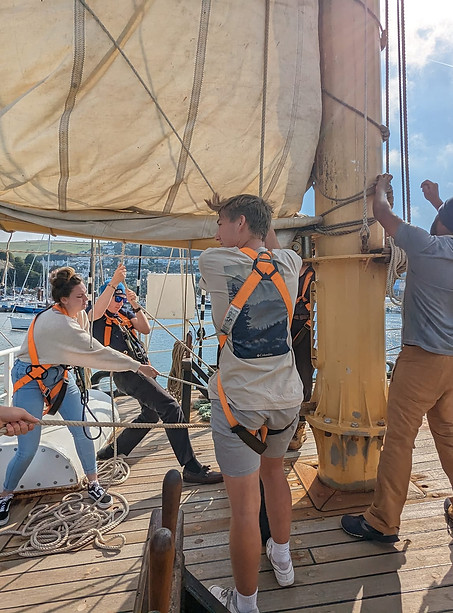
At the heart of the expedition sails an extraordinary vessel.
Built in 1948, the Pelican of London is a 45-metre historic sailing ship whose unique rig and reliance on wind make it a powerful symbol of efficiency, sobriety and resilience.
More than a ship, it is a living classroom.
Students do not simply travel,
they learn to sail, to work as a team, to read the wind and the sea, and to experience first-hand what it means to live in balance with natural forces.


A UNIQUE LEARNING JOURNEY
This is not a study trip.
It is a privileged entry into the living ecosystem of conservation, at sea, on land, and within the institutions that govern it.
How the experience
is shaped
- Transdisciplinary. All academic backgrounds welcome, the expedition is designed for curious minds, not specific degrees.
- Intergenerational. Founded on transmission between knowledge holders and the next generation of ocean stewards.
- Intercultural. Valuing Indigenous, traditional, and local knowledge alongside science.
- Participatory. Local actors and students co-construct the experience, the expedition learns from the communities it visits, not about them.
- Active. Every day combines navigation, fieldwork, workshops, and direct encounters with the institutional and human ecosystem of Mediterranean conservation.
And you will learn offshore navigation alongside experienced crew
👉 Discover Guardians of Gaia

Activities at Sea
At sea Navigation, science, and ocean governance
Imagine waking up at dawn on the deck of the Pelican of London, a 45-metre three-masted tall ship, with the Mediterranean stretching in every direction. You are not a passenger. You are part of the crew, learning to read the wind, handle the sails, and navigate real offshore conditions alongside experienced sailors. The same vessel has trained cadets of the British Royal Navy.
Between manoeuvres, you work:
-
Underwater noise recordings with professional hydrophones
-
eDNA sampling and citizen science pollution mapping
-
Working sessions with SPA/RAC experts on Mediterranean marine protected areas
-
Engagement with IMO programmes on ocean noise and plastic pollution
You are not studying ocean governance from a textbook. You are inside it.
Activities on Land
Communities, diplomacy, and networking
At each port of call, the ship becomes a base camp. You step ashore into the living network of Guardians of Gaia, visiting coastal hubs, spending time with conservation key actors.
The expedition also opens doors that are rarely accessible:
-
Roundtables and keynote sessions with leading academics, policymakers, and conservation figures
-
Evening receptions where informal conversations become real connections — the researcher who becomes a mentor, the institution that becomes a partner
-
Press conferences and media moments at key stopovers, where the expedition's story reaches wider audiences and participants contribute to shaping it
-
Guided encounters with Mediterranean natural and cultural heritage sites
All of this unfolds within a framework of cultural, environmental, and scientific diplomacy, the conviction that protecting the living world requires not only field action and data, but the patient, sustained work of building understanding across cultures, disciplines, and generations.
You are not observing the world. You are helping shape how it is protected.

AN EXPEDITION FOR ALL
At every port of call, 100 to 200 local participants join at the Ship arrival and participate in
- Workshops and roundtables
- Conferences
- Cultural visits and activities
>> Youth
- Students onboard the tall ship the Pelican of London :
Young adults (18+) seeking meaning, direction, skills, and real-world impact — whether they envision a career linked to the ocean or simply want to understand the world differently.
Each voyage brings together around 40 students and early-career researchers from environmental sciences, law, diplomacy, engineering, and the arts. The ship becomes a floating think tank, where disciplines, cultures, and perspectives intersect.
- All coastal students participating in local existing or new Unesco Science Clubs to monitor their marine ecosystems for the upcoming 3 years
>> Coastal civil society :
- Traditional fishers, educators, scientists, port authorities, local leaders, who live with the sea, depend on it, protect it, and wish to strengthen their capacity to act.
Fishermen, elders, community leaders, and scientists share Traditional Ecological Knowledge, reconnecting modern science with lived experience and long-term observation.
.png)
Interconnected modules that combine science, culture, ethics, sailing and hands-on actions

M1 – Intercultural & Ethical Foundations
Students explore cultural diplomacy, scientific ethics, and the principles of Free, Prior and Informed Consent (FPIC), ensuring that all research respects local communities and avoids “parachute science.”

M4 – Reflection, Dialogue & Co‑Creation
Daily debriefings on deck, roundtables with local partners, and collaborative problem‑solving sessions help students transform observations into solutions.

M2 – Understanding the Territories
Each destination becomes a case study in history, geopolitics, ecology, and governance.
Students learn how environmental challenges are shaped by culture, policy, and lived experience.
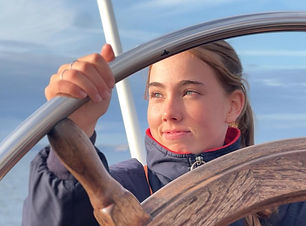
M5 – Navigation & Leadership
Sailing a tall ship is not a metaphor for leadership. It is leadership, immediate, physical, and collective. Take the helm, stand watch, and learn to make decisions under real conditions, with a crew that depends on them.

M3 – Fieldwork & Ocean Science
Introduction to real scientific missions: eDNA biodiversity sampling to detect and identify species, Underwater acoustic monitoring to measure human impact on marine life AND Pollution mapping.

M6 – Beyond the Expedition
You can continue the adventure with Gaia First.
If you want to
embark with us
Watch this short video
(4 min)
English
If you want to
embark with us
Watch this short video
(4 min)
French
THE 2027
ROUTES


Departing from Tangier (Morocco) and ending in Monaco (Monte Carlo)
Every stop will be in ports near Marine Protected Areas (MPA) for monitoring access and development. The overall trip is divided into 2 legs (trips). Student may select one or both trips.
Leg 1
Departing from Tangier (Morocco) and ending in Tunis (Tunisia)
-
Tangier (Morocco)
-
Cartagena (Spain)
-
Valencia (Spain)
-
Tunis (Tunisia)
Leg 2
Departing from Tunis (Tunisia) and ending in Monaco (Monte Carlo)
-
Tunis (Tunisia)
-
Palermo (Italy)
-
Marseille/Nice (France)
-
Monaco (Monte Carlo)


.jpg)
Tangier

Tunis

Cartagena

Palermo
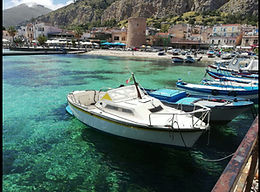
Valencia

Marseille/Nice

Monaco


Join and Support This Unique Program
-
Foster Dialogue and Partnership: Students and mentors collaborate with local communities, offering tailored support where requested.
-
Learn Through Action: Participants engage in marine observations and workshops to co-create conservation strategies.
-
Adopt a Multidisciplinary Approach: Education spans through marine biodiversity, circular economy, conservation science, and traditional ecological knowledge, preparing participants to address complex challenges and develop ongoing projects.