
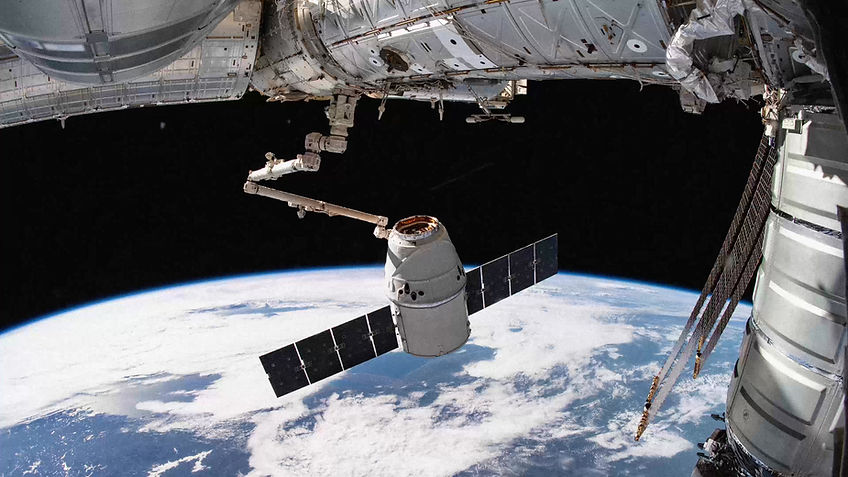
Our Earth Digital Twin
for Open Science
Guardians of Gaia transforms education, conservation, and science into a shared intelligence for the future of the planet.
Our program actively contributes to the Digital Sustainable Development Goals Programme (DSP), a flagship international scientific initiative endorsed by UNESCO under the International Decade of Sciences for Sustainable Development (2024–2033).
A Shared Vision
The DSP is processing satellite data, AI models, and planetary trends,
while Guardians of Gaia will act as a sensory network, collecting precise, ground-truth information from the places where life is most vulnerable and most alive.
Together, they ensure that global sustainability goals are not abstract targets, but measurable, living realities, from mountains to seas.
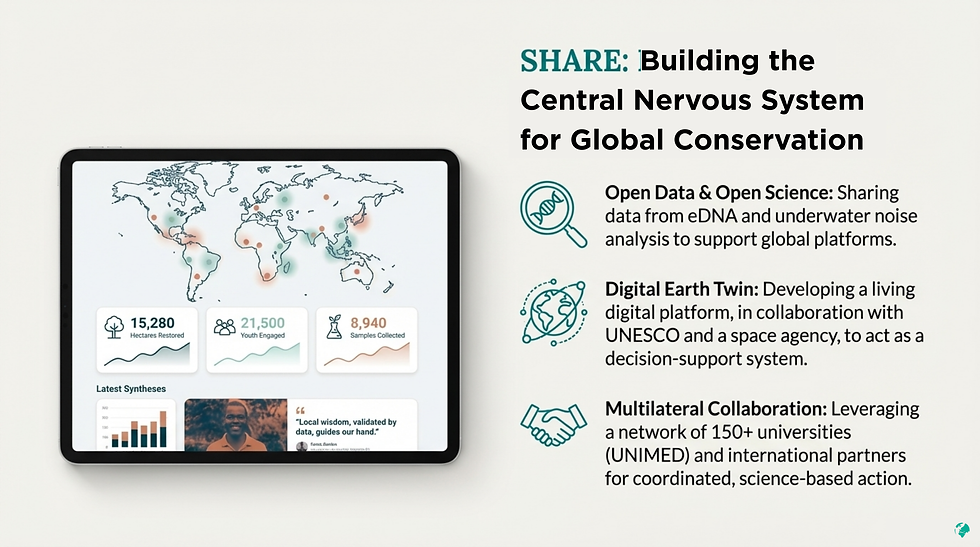
We Support the Digital Sustainable Development Goals (DSP)
From Local Action to Global Decision‑Making
Guardians of Gaia is not only a conservation and education program — it is also a scientific infrastructure designed to strengthen global sustainability governance.
Led by the International Research Center on Big Data for Sustainable Development Goals (CBAS), the DSP mobilizes more than 50 research institutions across 30+ countries to address one of the greatest challenges of the 2030 Agenda: the global environmental data gap.

From Individual to Collective Intelligence
Today, more than 60% of SDG indicators lack sufficient data, limiting the ability of governments and institutions to design evidence‑based policies and track real progress.
Guardians of Gaia responds to this challenge by transforming local conservation action into high‑value, decision‑ready intelligence. We develop ecosystem monitoring protocols and indicator frameworks that are both locally relevant and globally scalable, advancing the 2030 Agenda with robust, context‑sensitive metrics across 150 key ecosystem hubs worldwide.
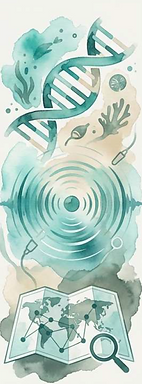
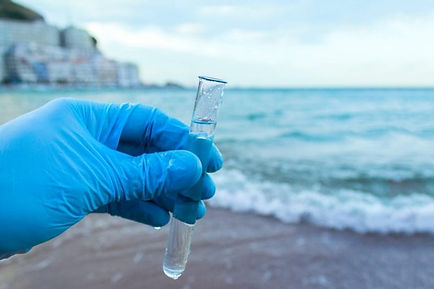
Through its regional hubs and scientific expeditions, the program generates standardized, internationally comparable datasets, including:
· biodiversity data (eDNA)
· underwater noise monitoring
· pollution mapping
· ecosystem restoration indicators
Together, these data streams form a coherent, interoperable foundation for global environmental governance, ensuring that field data can directly support SDG monitoring and decision‑making.

From Local to Global Intelligence
The Gaia First Digital Earth Twin Platform acts as a central nervous system for planetary conservation — connecting field data, scientific analysis, and policy relevance in real time.
It strengthens the DSP in three key ways:
Guardians of Gaia responds to this challenge by transforming local conservation action into high‑value, decision‑ready intelligence. We develop ecosystem monitoring protocols and indicator frameworks that are both locally relevant and globally scalable, advancing the 2030 Agenda with robust, context‑sensitive metrics across 150 key ecosystem hubs worldwide.
Through its regional hubs and scientific expeditions, the program generates standardized, internationally comparable datasets, including:
· biodiversity data (eDNA)
· underwater noise monitoring
· pollution mapping
· ecosystem restoration indicators
Together, these data streams form a coherent, interoperable foundation for global environmental governance, ensuring that field data can directly support SDG monitoring and decision‑making.
1. Closing the Data Gap :
Data generated by Guardians of Gaia hubs and expeditions — including the Mare Nostrum mission aboard the Pelican of London — feeds directly into global SDG datasets, turning local measurements into actionable intelligence for governments, researchers, and international institutions.
2. Bridging Science and Traditional Knowledge :
Beyond quantitative data, the platform integrates Traditional Ecological Knowledge (TEK) shared by Indigenous and local communities.
All TEK is accessed only under Prior Informed Consent and mutually agreed terms, ensuring full respect for cultural rights, intellectual sovereignty, and the principles of CBD Article 8(j).
This qualitative intelligence adds depth, context, and long‑term ecological insight to scientific models, strengthening both ethical practice and conservation outcomes.


3. Transparency and Open Science.
The platform provides:
· open‑access datasets
· shared methodologies
· real‑time dashboards tracking restored ecosystems and protected species
This commitment to openness supports replication, trust, and evidence‑based policymaking at international, national, and local levels.