

Reach Higher
A One-of-a-Kind
Learning Arc
Participants learn as they stand at the forefront and take part in a pionnering mission in collaboration with Unesco.
Participants learn as they stand at the forefront and take part in a pionnering mission in collaboration with Unesco.
All insights will contribute to the Guardians of Gaia platform, supporting SDG reporting, scientific research, and territorial action. Participants follow a structured curriculum that weaves citizen science, cultural, environmental diplomacy.
This program is based on an approach that is:
- Transdisciplinary, all study background welcome
- Intergenerational, founded on transmission between elders and youth.
- Intercultural, valuing Indigenous, traditional, and local knowledge alongside science.
- Participatory, involving local actors in co-constructing solutions.
- Active, based on expeditions, workshops, educational content, and concrete field actions.
- and you will have the unique change to learn how to sail onboard the historic tall ship, the Pelican of London
👉 Discover Guardians of Gaia /DSP/Earth Twin
This is not abstract knowledge.
It is learning anchored in place — and purpose.
You are not observing the world.
You are helping shape how it is protected and better governed.
.png)

The Mare Nostrum learning arc unfolds through interconnected modules that combine science, culture, ethics, sailing and hands-on actions

M1 – Intercultural & Ethical Foundations
Students explore cultural diplomacy, scientific ethics, and the principles of Free, Prior and Informed Consent (FPIC), ensuring that all research respects local communities and avoids “parachute science.”

M4 – Reflection, Dialogue & Co‑Creation
Daily debriefings on deck, roundtables with local partners, and collaborative problem‑solving sessions help students transform observations into solutions.

M2 – Understanding the Territories
Each destination becomes a case study in history, geopolitics, ecology, and governance. Students learn how environmental challenges are shaped by culture, policy, and lived experience.
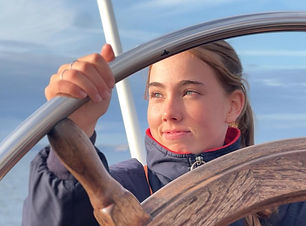
M5 – Navigation & Leadership
Daily debriefings on deck, roundtables with local partners, and collaborative problem‑solving sessions help students transform observations into solutions.

M3 – Fieldwork & Ocean Science
Near Marine Protected Areas, students conduct real scientific missions:
-
eDNA biodiversity sampling,
-
underwater acoustic monitoring,
-
pollution mapping

M6 – Beyond the
learn sailing onboard the historic tall ship The Pelican of London
If you want to
embark with us
Watch this short video
(4 min)
French